
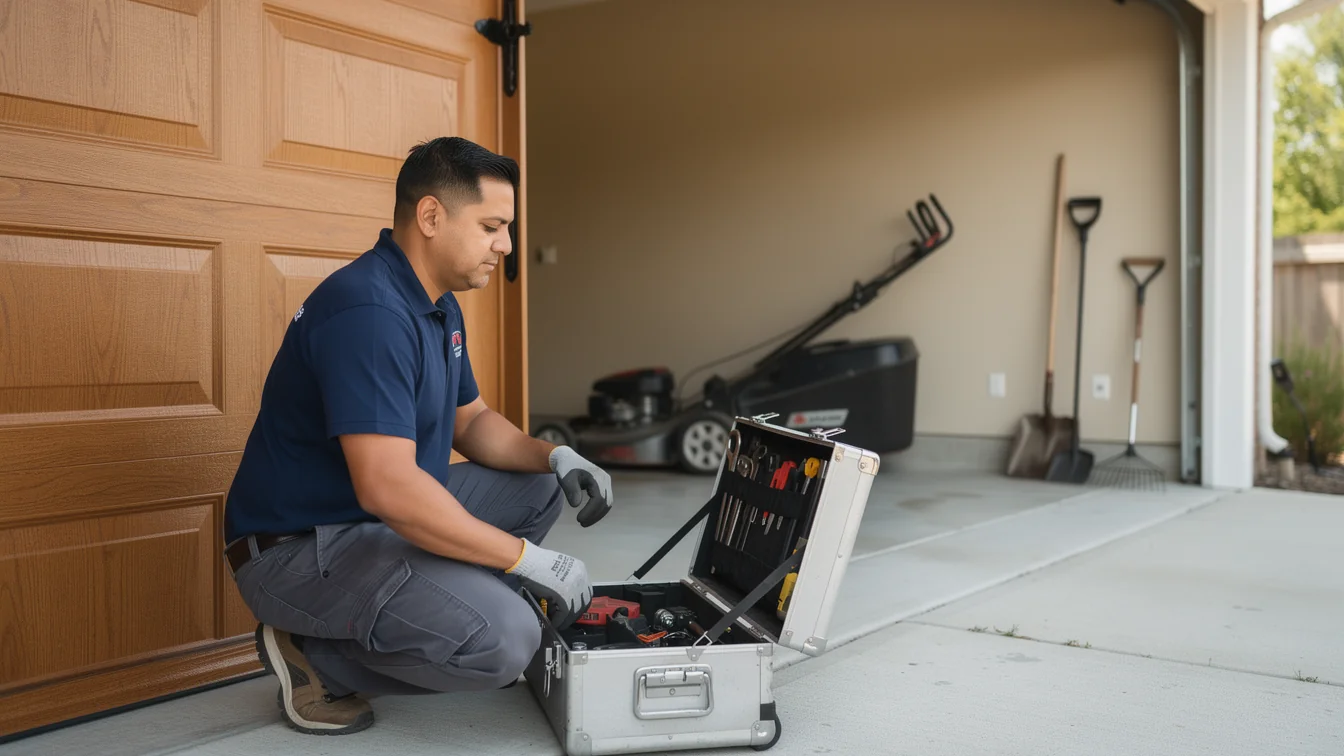
What a Service Call Actually Covers in Nampa
A straight look at what a Nampa Door Pros service call covers, built around Nampa's 1980s-90s housing stock and the cold winters that wear out springs and openers here.
Read moreBlogNampa, ID · 4 min read
Nampa's 1980s-90s housing stock and cold winters mean torsion springs fail hard and fast. Here's what's going on and what to check before you call.
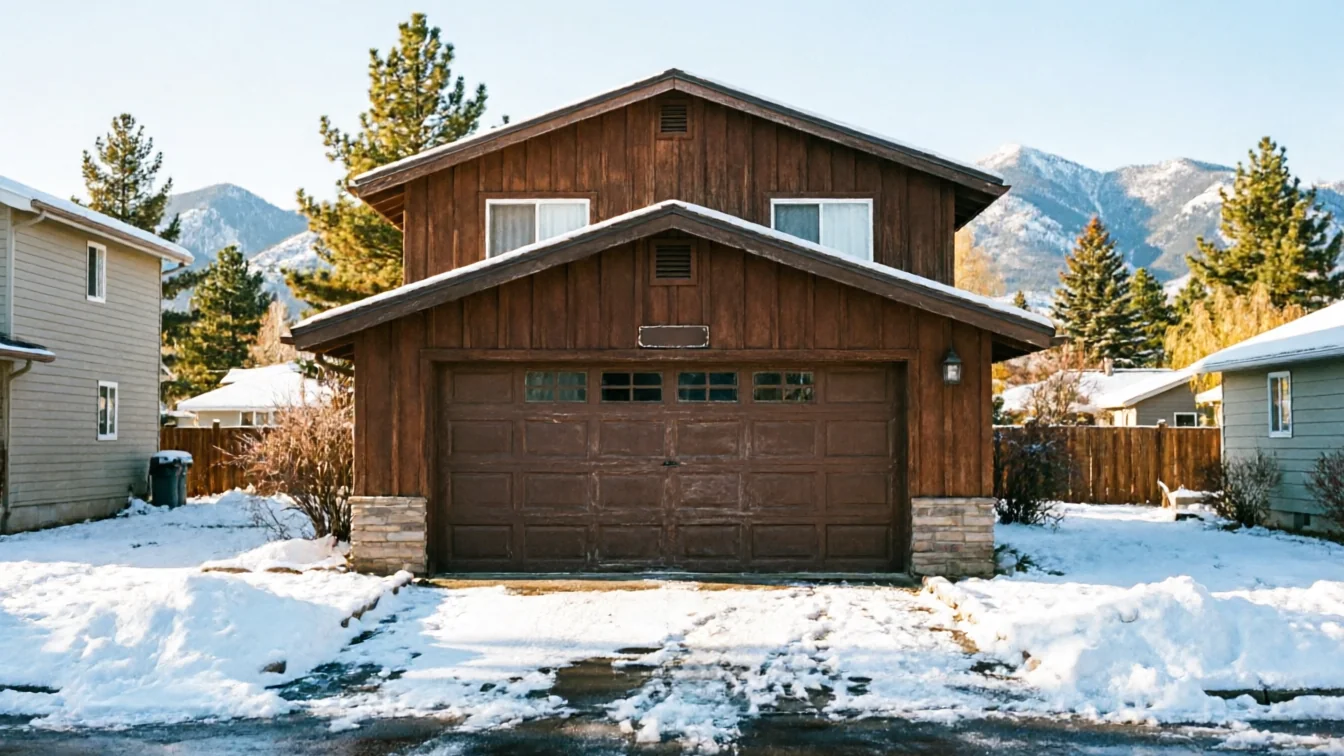
Local detail
Steel contracts when it gets cold, and a torsion spring that's already near the end of its cycle count loses what little give it had left. Most of the houses in this part of the Treasure Valley went up between 1973 and 2009, with the median build year sitting around 1990 - so a lot of garages out there still have the original spring, or a first replacement, pushing 30-plus years of service. That spring was never going to last forever, but a hard cold snap is usually what finishes it off, not what starts the problem. The failure itself is almost always sudden: a loud bang, the door won't budge or drops fast on the way down, and the opener strains or reverses. That's the spring doing the carrying, not the motor. If your house falls into that common 1980s-90s stock that covers a lot of neighborhoods around here, the spring under your door is doing more flexing per cycle in winter than it was ever rated for when it was wound.
The area
Before you call anyone, look at the spring itself - it sits above the door, either one long torsion spring across the center or two shorter ones. A broken one shows a visible gap, usually a clean separation where the coil has split. Don't try to open the door manually if you see that gap; the cable and drum system can still be under tension and a double door with a snapped spring is heavy enough to hurt someone. Check the date on any sticker or tag near the spring if one's still there - on a house built in the 1973-2009 range, especially the older end of that, the original hardware is not rated for the use it's gotten. Also look at the bottom panel and rollers while you're out there. Cold makes plastic rollers brittle and panels that were already dented tend to crack rather than bend. None of this is a DIY spring swap - that part of the job needs the right winding bars and a correctly rated spring for your door's weight, and getting it wrong is how people get hurt.
What we find
This area sits in a severe cold climate band, and that matters more for garage doors than people expect. Cold doesn't just make steel brittle - it changes how grease behaves in the spring coils and in the opener's gear housing, so everything runs stiffer right when the spring has the least flex to give. A door that's borderline in October usually fails in a hard freeze, not gradually. Humidity swings between a cold night and a sunny afternoon also work on wood jambs and panel seams over the years, which is part of why homes from that 1980s-90s build wave start showing combined problems - a tired spring and a track that's shifted slightly out of plumb - at the same time instead of one at a time. If your door is acting up only on the coldest mornings and seems fine by afternoon, that's the spring and the lubrication both telling you winter is exposing a problem that was already there.
How we work
We don't have a flat number to quote you here, because spring jobs vary by door weight, whether it's one spring or two, and what's actually failed alongside it - a broken spring under tension can also take out a cable or bend a drum on its way down. What we can tell you is that waiting rarely saves money. A spring that's about to go in cold weather tends to take something else with it, and a same-day spring swap is a much smaller job than a spring-plus-cable-plus-panel repair after a bad break. Given the median household income in this area sits around $66,761, most of what we see are people trying to decide between fixing an aging torsion spring now versus letting it go until it fails - and the honest answer is almost always to replace it before winter turns it into two problems instead of one.
Questions
Cold weather stiffens the steel and the grease in the coil, so a spring that's near the end of its life has less give left when the temperature drops. It was likely already close to failing - a hard freeze is usually what pushes it over, not the sole cause. Houses in this area built in the 1973-2009 range are the ones we see this in most.
We'd rather you didn't. A torsion spring is wound under heavy tension and needs the correct winding bars and the right-rated spring for your door's weight. It's one of the few repairs on a garage door that causes serious injuries when it goes wrong, so this is a call-a-pro job, not a weekend project.
Likely yes. If the spring is broken, the opener is trying to lift the full weight of the door alone, which it isn't built to do. You'll usually hear the motor strain or the door barely creep up before stopping. Don't keep running the opener - that can burn out the motor on top of the spring problem.
It does. A lot of homes in this area were built between 1973 and 2009, with plenty from the 1980s and 90s specifically. Original hardware from that era is often still in service and wasn't built for 30-plus years of cold-weather cycling, so age of the house is a real clue to what's going on with the spring.
Recommendation
More garage door guides for Nampa homeowners.
A straight look at what a Nampa Door Pros service call covers, built around Nampa's 1980s-90s housing stock and the cold winters that wear out springs and openers here.
Read more
Nampa homes built between 1973 and 2009 carry openers and springs sized for a different era.
Read more
How Nampa's 1973-2009 housing stock and cold-severe winters affect garage door openers during power cuts, what to check first, and what actually costs money to fix.
Read moreReady when you are
Nampa Door Pros repairs and installs garage doors, springs and openers in Nampa, ID and the surrounding area.