
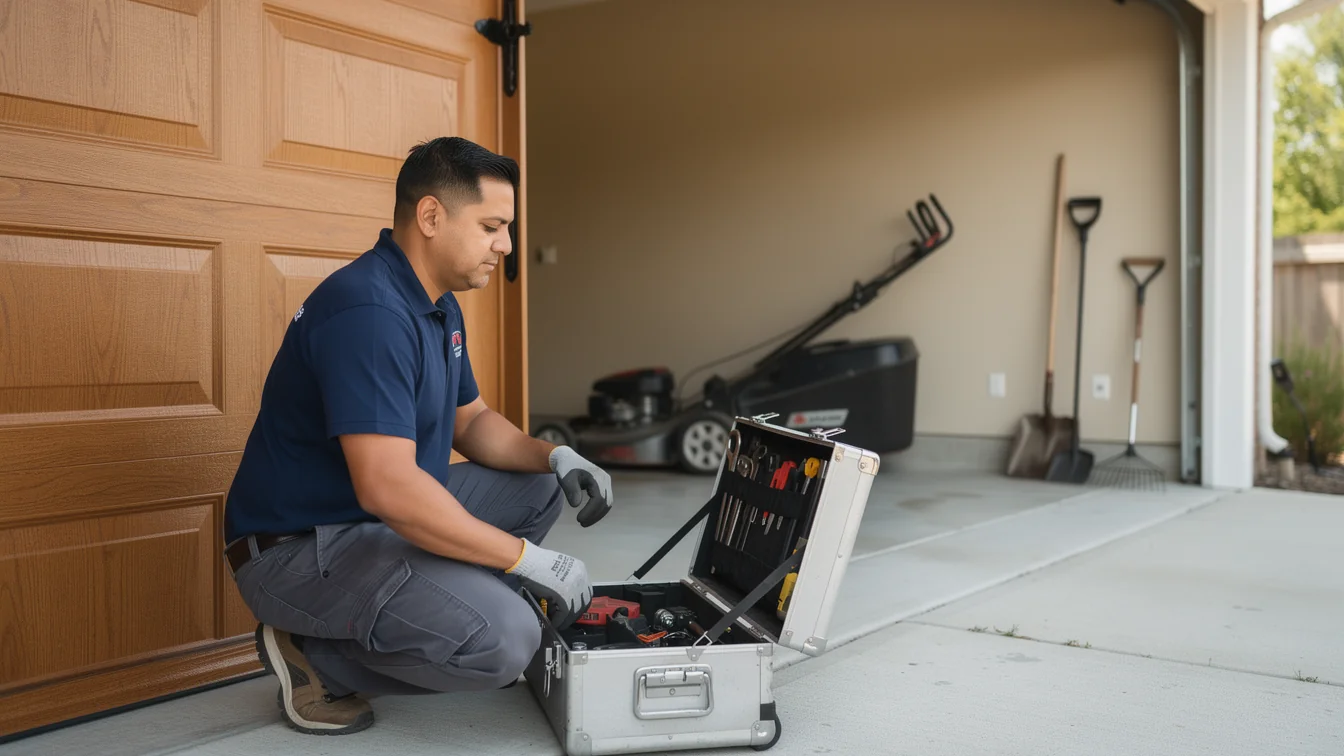
What a Service Call Actually Covers in Nampa
A straight look at what a Nampa Door Pros service call covers, built around Nampa's 1980s-90s housing stock and the cold winters that wear out springs and openers here.
Read moreBlogNampa, ID · 4 min read
How Nampa's 1973-2009 housing stock and cold-severe winters affect garage door openers during power cuts, what to check first, and what actually costs money to fix.
Local detail
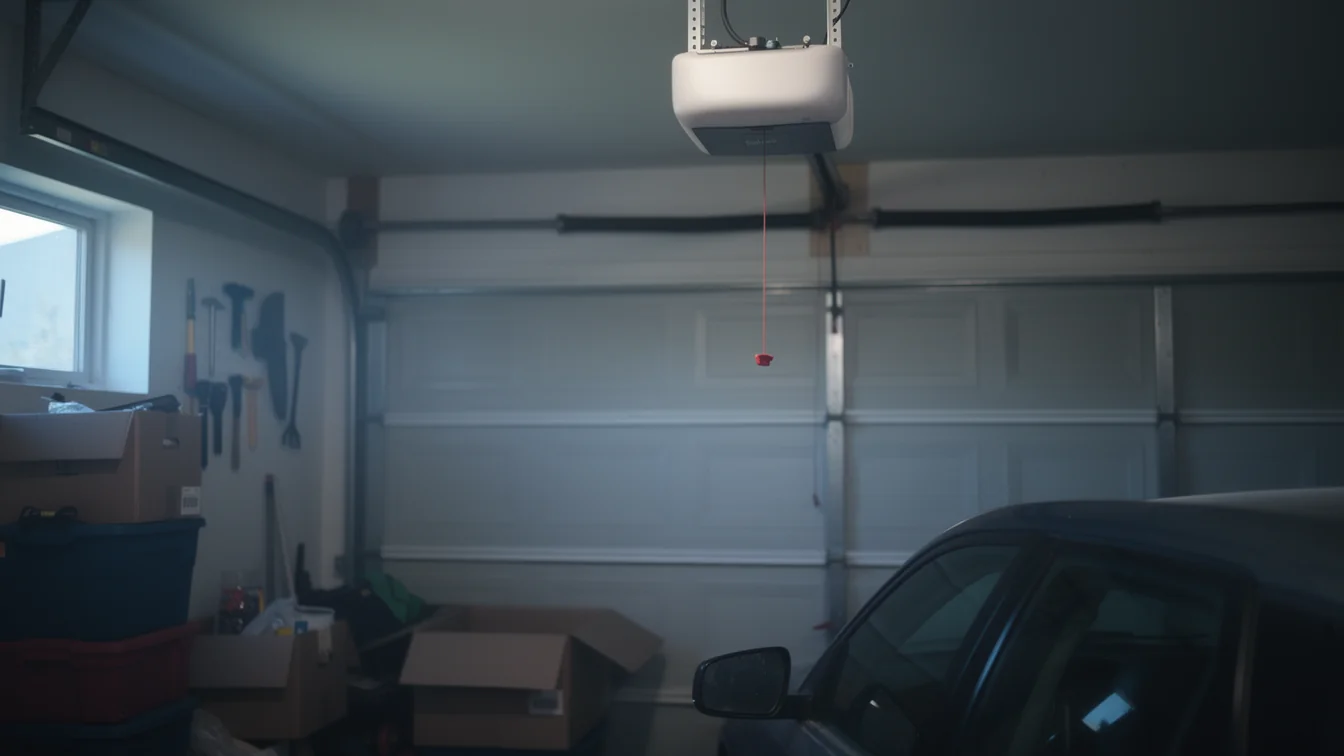
A power cut doesn't care what kind of door you have. It cares what kind of opener you have. Most houses in the Nampa service area went up between 1973 and 2009, with the median build year around 1990, which means a lot of openers out there are the original units or a direct swap from that era - chain-drive, no battery backup, no way to open the door except the manual release cord hanging from the rail.
That matters because battery backup didn't become a common feature until well after most of this neighborhood stock was built. If your house falls into that 1973-2009 window and nobody's touched the opener since, you've got a motor that goes dead the second the breaker trips, and a door that's stuck shut or stuck open depending on where it was when the lights went.
We're not saying every house has this problem. Plenty of owners have replaced their opener since. But across the twelve areas we work in, the housing stock mostly dates to the 1980s and 90s, and that generation of openers is the one most likely to leave you standing in the driveway with a flashlight and a manual release you've never used before.
The area
Before you assume you need a new opener, go look at the unit itself. Find the model plate on the motor housing and check for a battery compartment - it's usually a small box bolted to the side or back of the head unit. If there isn't one, you've got an opener with no backup power, full stop, regardless of how new the rest of the door looks.
Next, find the manual release cord - the red handle hanging down from the rail. Pull it once, with the door closed, just to confirm it disengages the trolley cleanly. On older units from houses built in that 1973-2009 window, this cord sometimes gets reattached wrong after a repair, or the spring mechanism inside the release has stiffened up from age and doesn't let go smoothly.
Last, check the wall switch. If it's hardwired with no battery override button, that's another sign you're dealing with an original or early-replacement unit built before backup power was standard. None of this tells you whether you need a new opener - it just tells you what you're actually working with before a power cut forces the issue.
What we find
Nampa sits in a cold-severe climate band, and cold is hard on batteries specifically - harder than most people expect. A battery-backup opener rated to run a door for a certain number of cycles on paper will run fewer of those cycles once the garage temperature drops, because both lead-acid and lithium chemistries lose usable capacity in the cold. That's not a defect, it's just how batteries work, and it means a backup system that seemed fine in September can underperform during the exact kind of winter outage it was bought for.
Cold also affects the door itself during a power cut, separate from the opener. Steel sections contract slightly, lubricant on rollers and hinges thickens, and a door that's already a little out of adjustment gets harder to lift by hand right when the manual release is your only option. If you're pulling that cord in January instead of testing it in a dry garage in July, expect more resistance than you'd get on a mild day.
We don't carry every battery chemistry on the truck, and cold-rated backup batteries sometimes need to be special-ordered rather than swapped on the spot.
How we work
We're not going to put a number here that isn't backed by anything - pricing depends on the opener you've got, whether the issue is the motor, the battery, or just a release mechanism that needs adjusting, and we'd rather tell you that than make one up.
What we can say is how owners here tend to approach the decision. With a median household income of $66,761 across the service area, most people we talk to are weighing a battery-backup retrofit into an existing opener against replacing the whole unit, not jumping straight to full replacement. If your opener is from that 1973-2009 build era and otherwise running fine, a backup battery kit is usually the cheaper path. If the motor itself is failing - grinding, slow travel, the gear already stripped - then adding a battery to a dying motor doesn't make sense, and replacement is the honest answer.
Across 60,492 households and 38,967 owner-occupied houses in this area, we see both situations regularly. The only way to know which one you've got is to look at the actual unit, not guess from the age of the house.
Questions
Look for a small compartment box attached to the opener's head unit, usually near the motor housing. If you don't see one, your opener doesn't have backup power, which is common on units original to houses built before battery backup became a standard feature.
It will work, but expect reduced runtime. Cold-severe winters here pull capacity out of both lead-acid and lithium batteries, so a backup rated for a certain number of cycles at room temperature will do fewer of them once the garage gets cold.
If the motor runs fine and the only issue is no backup power, a battery kit is usually the simpler fix. If the motor itself is already failing - grinding, slow, or stripped gears - adding a battery to it doesn't solve the real problem.
Recommendation
More garage door guides for Nampa homeowners.
A straight look at what a Nampa Door Pros service call covers, built around Nampa's 1980s-90s housing stock and the cold winters that wear out springs and openers here.
Read more
Nampa homes built between 1973 and 2009 carry openers and springs sized for a different era.
Read more
Nampa's 1980s-90s housing stock and cold winters mean torsion springs fail hard and fast.
Read moreReady when you are
Nampa Door Pros repairs and installs garage doors, springs and openers in Nampa, ID and the surrounding area.